The questions that always come up in the first conversation, answered before you have to write.
How much does a solar calculator for my company's website cost?
Three levels, one single setup payment: Base €990 + VAT, Standard €1,700 + VAT and Premium €2,990 + VAT. The voice assistant that answers phone calls is a separate service, €2,000 + VAT.
Is there a compulsory monthly fee?
No. Setup is a one-off payment and the calculator is yours. Support is optional: by the hour at €50/hour, or €90/month with up to 20 changes a month, or €150/month with up to 40.
Google, CRM and AI costs are billed in your name with your own spending cap — nobody resells them to you with a markup.
Does it carry my brand or does it look like someone else's product?
Yours: your logo, your colours, your typeface, your domain and your WhatsApp. The customer sees one more part of your website, with no third-party badges. My name appears on no screen.
Does it fit into the website I already have?
Yes — WordPress, Wix or custom-built. It can also live on its own domain. It works the same on mobile.
Which CRM do the enquiries go to?
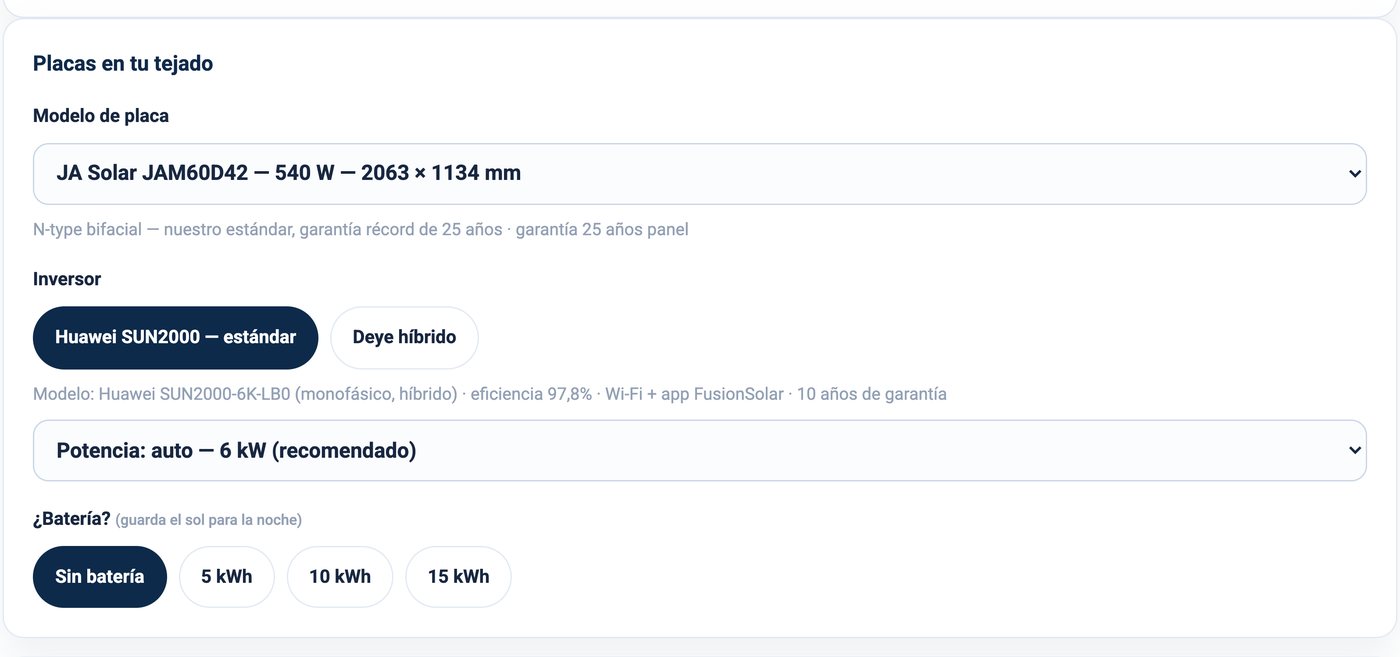
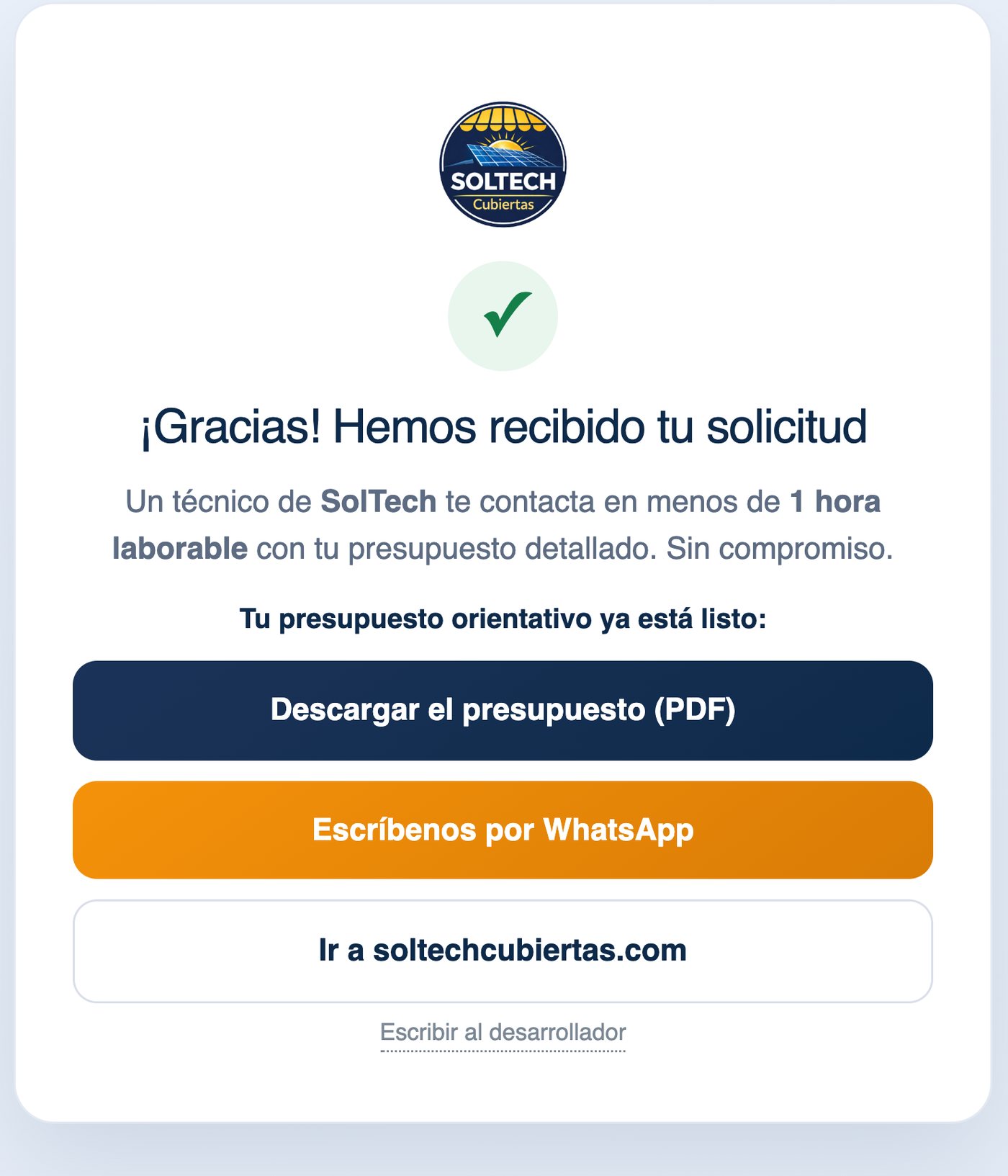
Today HubSpot, where the enquiry arrives as a complete record: address, kW, equipment, battery, savings, bill, language and source ad. One customer, one record, matched by the last 9 digits of the phone number.
Connecting a different CRM is days of work, not months, and is quoted separately before we start.
Where does the roof data come from?
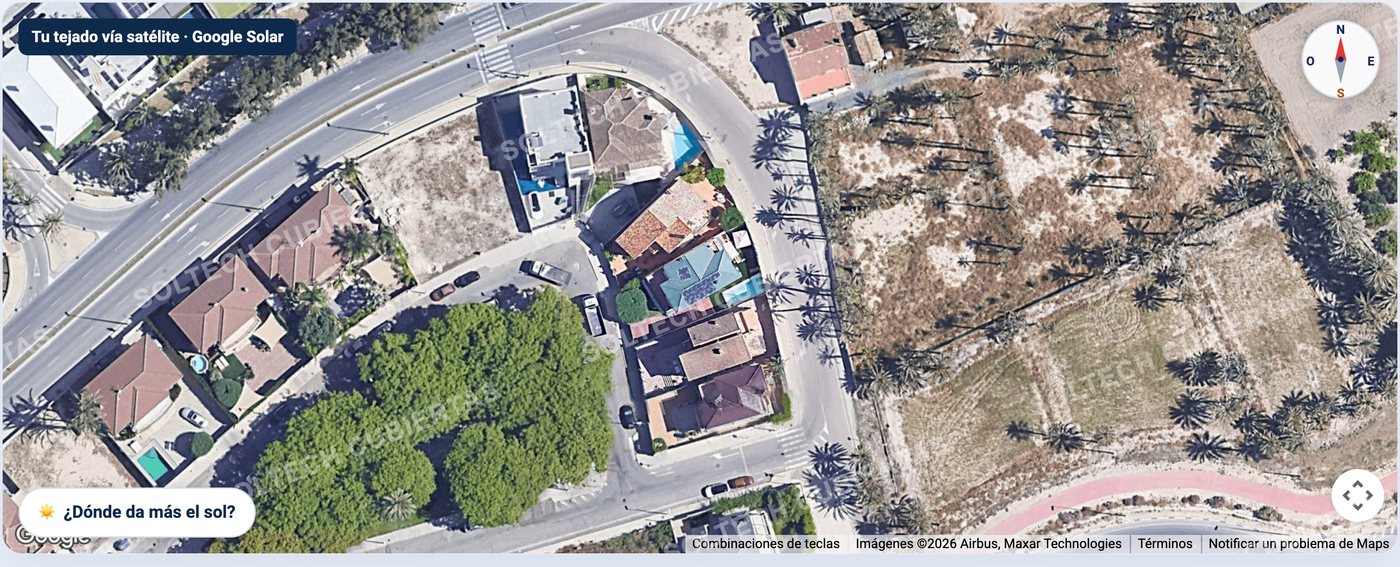
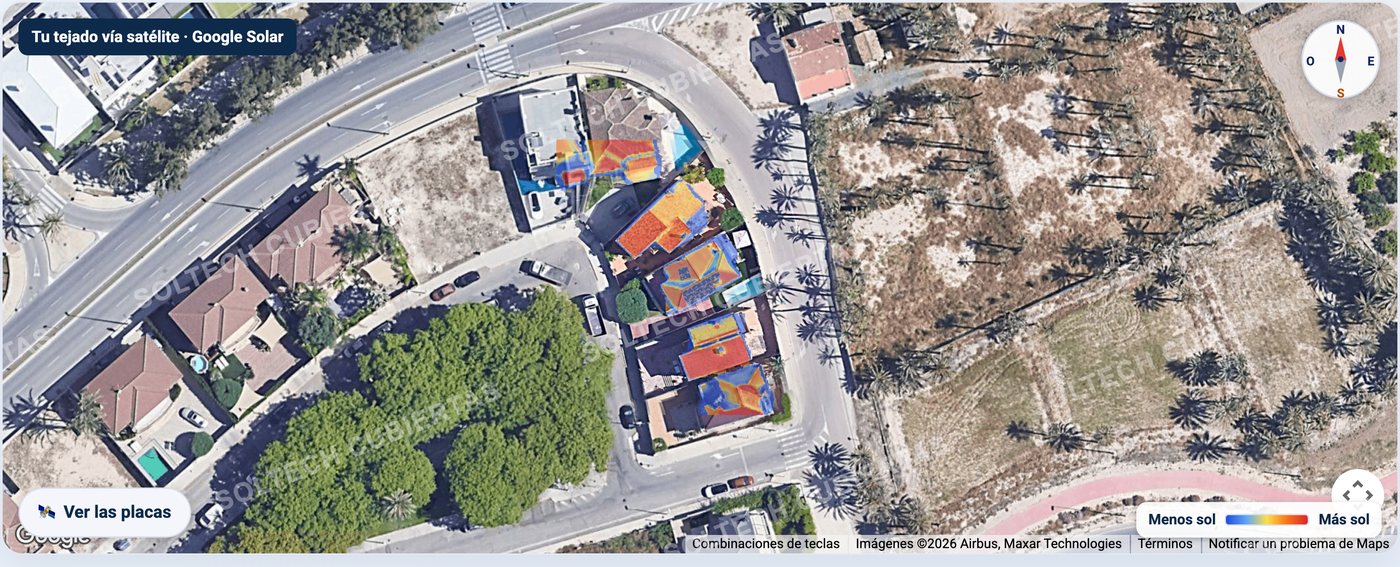
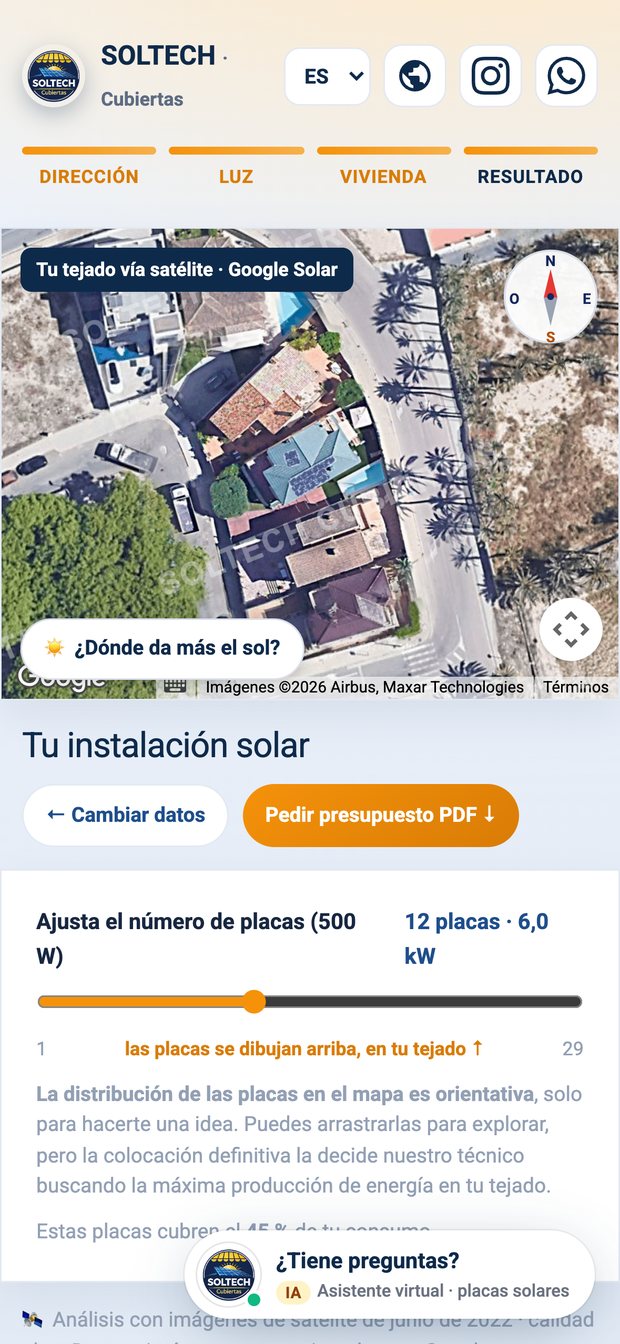
From Google Solar: real tilt, orientation and shading of that roof. The algorithm places the panels the way they would actually be mounted, starting with the most productive roof face. Where satellite coverage is missing, the calculator keeps working with an average estimate — the customer is never left without a result.
Which languages does it work in?
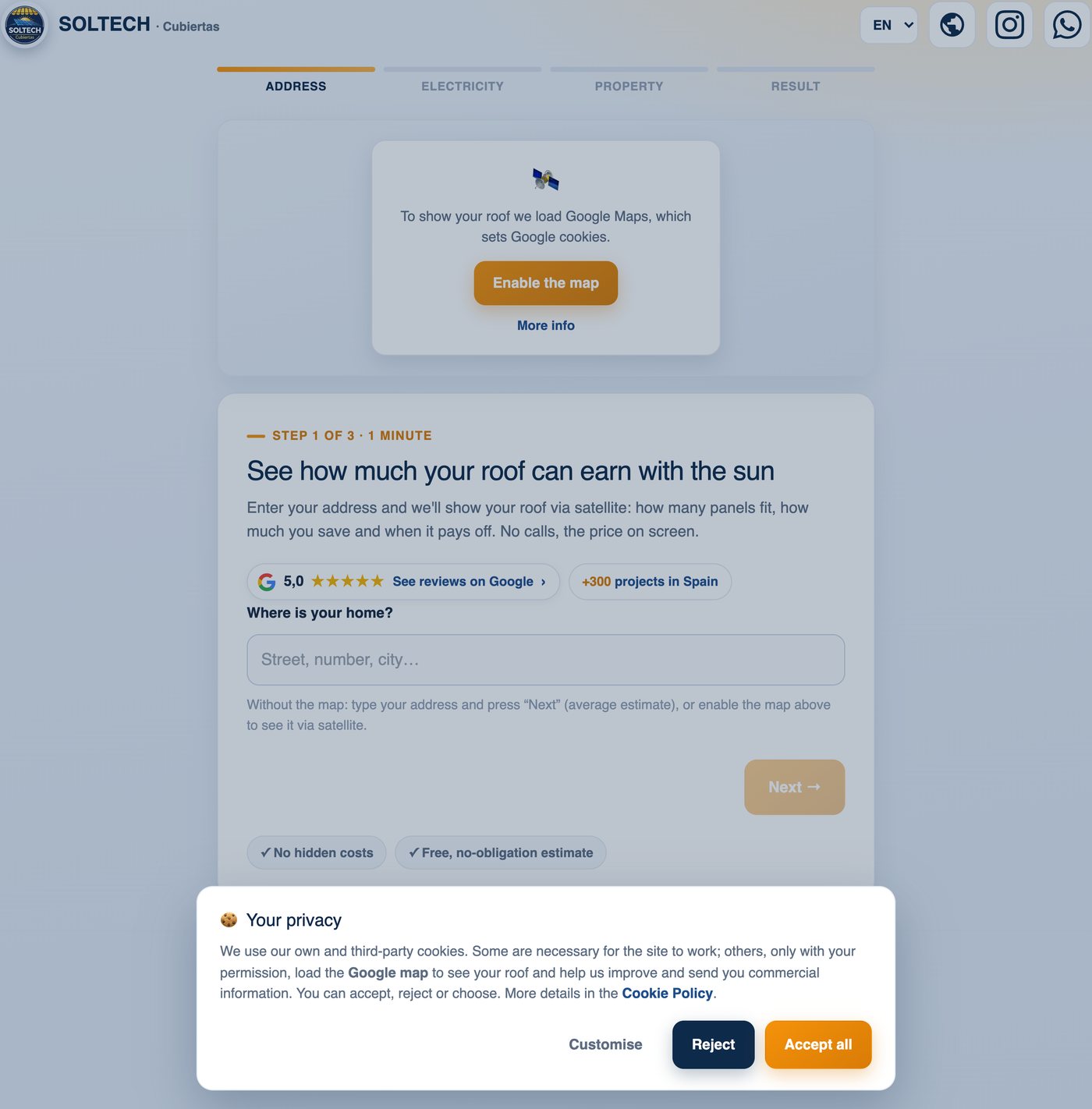
Seven, detecting the visitor's language automatically. Foreign customers calculate and ask in their own language, and the record reaches you with the language noted.
What does the AI assistant do, and how does it avoid inventing figures?
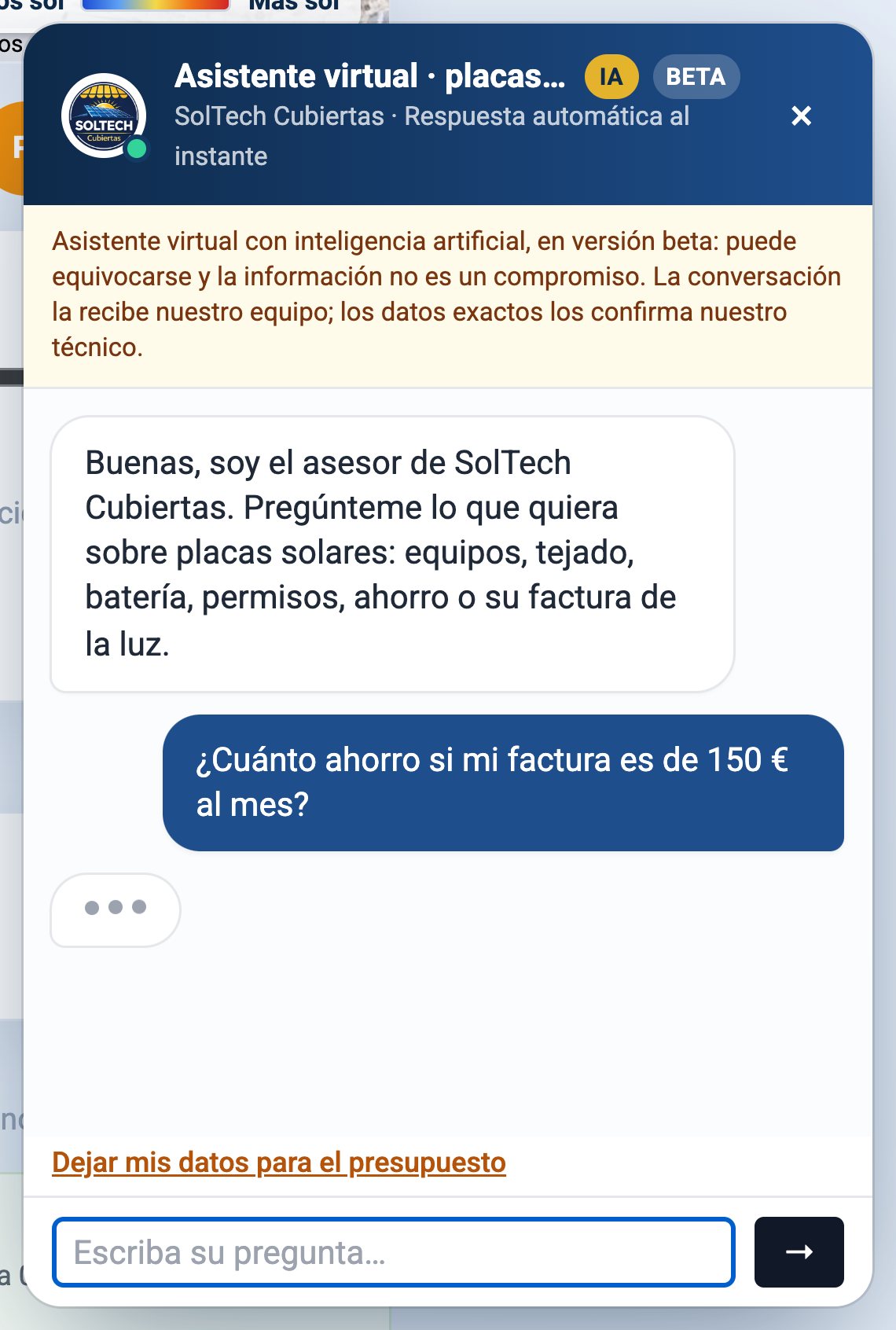
It comes with the Premium plan: it answers 24 hours a day in seven languages from your company's knowledge base — your warranties, your service area, your lead times and your prices — with three safeguards against invented figures. Chat questions land in the customer's record, with a 180-day archive and a daily self-review.
How long until it is up and running?
Days, not months. You give me your price list, your catalogue and access to your CRM, and I leave it running with your brand and your prices. A CRM other than HubSpot, or working outside Spain, is quoted separately beforehand.
Can I see one that is really in use?
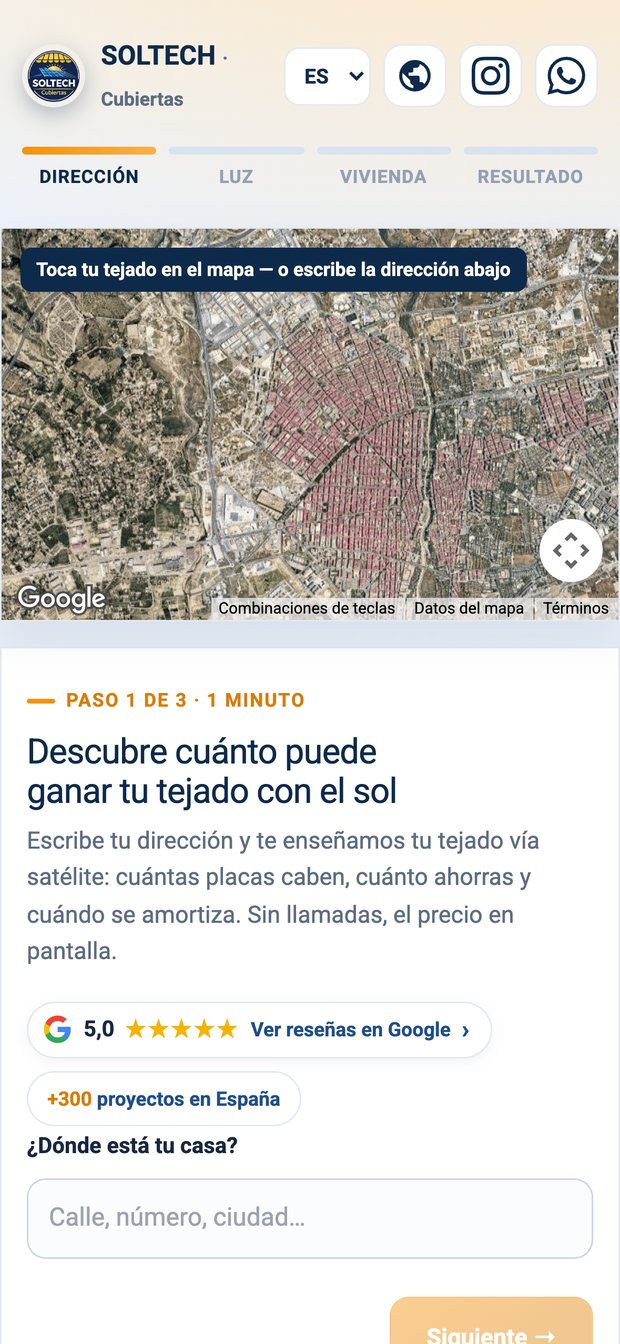
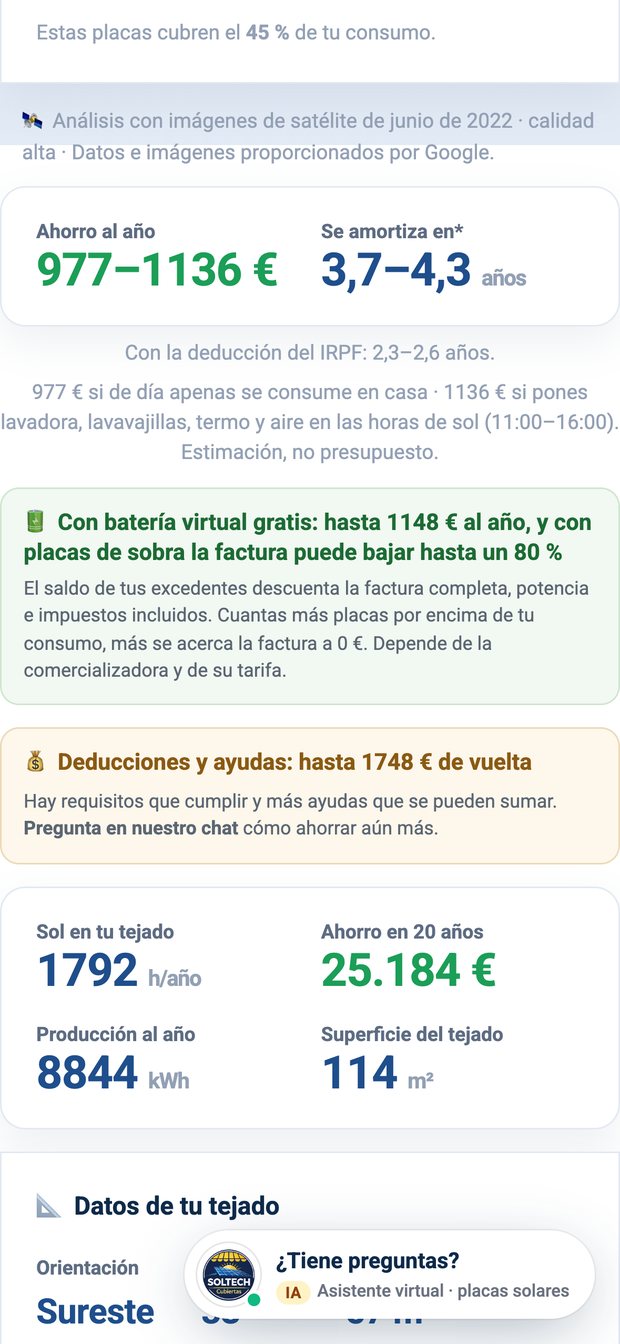
Yes. The demo is the calculator SolTech Cubiertas (Alicante) uses every day with its own prices and catalogue. On your website it will show your brand and your figures, with the same engine behind it.